
Understanding Muscle Knots, Tension & Targeted Pressure
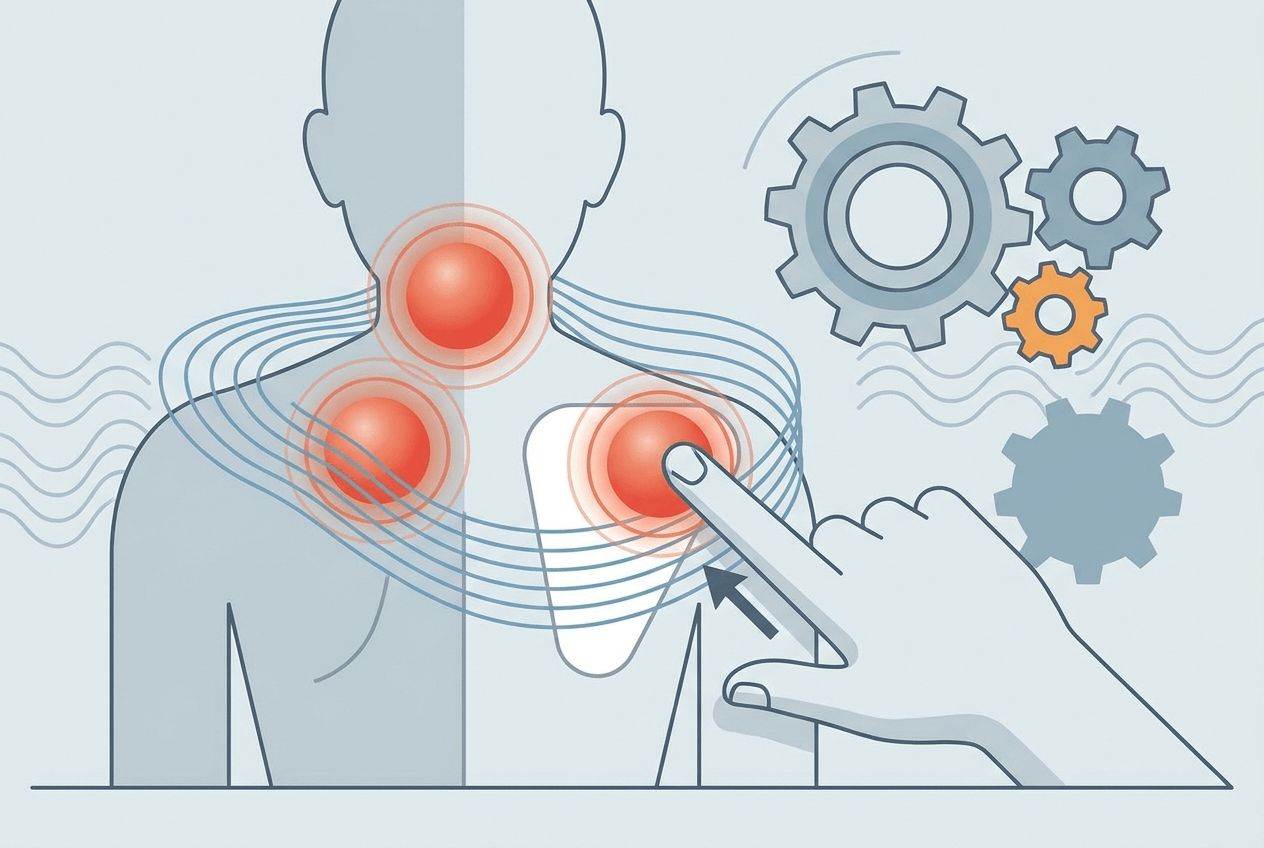
What Is Trigger Point Therapy? Understanding Muscle Knots, Tension, and Targeted Pressure
Have you ever felt a tight, tender spot in your neck, shoulders, upper back, or hips that just won't seem to go away?
Many people describe these areas as "muscle knots." While the term muscle knot isn't a formal medical diagnosis, these sensitive areas are often associated with what researchers call trigger points.
Trigger point therapy is a technique that applies targeted pressure to these areas with the goal of reducing tension, improving mobility, and increasing comfort. But what exactly are trigger points, and what does the research actually say?
What Are Trigger Points?
Trigger points are localized areas of muscle tightness and sensitivity that can develop in muscles throughout the body. They commonly occur in the neck, shoulders, upper back, trapezius muscles, glutes, hips, and calves.
Many people notice trigger points after intense exercise, repetitive movement, long hours sitting at a desk, poor posture, or periods of physical and emotional stress. When pressure is applied to a trigger point, the area may feel tender, tight, or uncomfortable.
What Causes Muscle Knots?
Researchers continue to study the exact causes of trigger points, but several factors may contribute:
- Muscle overuse
- Repetitive movements
- Prolonged static positions
- Limited movement
- Physical stress
- Inadequate recovery
Modern lifestyles often create the perfect environment for muscle tension to accumulate — particularly in the neck, shoulders, and upper back.
What Is Trigger Point Therapy?
Trigger point therapy involves applying focused pressure to areas of muscle tightness. The goal is to help reduce muscle tension, improve mobility, increase range of motion, support relaxation, and improve overall movement quality.
It can be performed by massage therapists, physical therapists, and athletic therapists — or through self-massage techniques you do on your own.
What Does the Research Say?
Research examining trigger point therapy and manual pressure techniques has produced encouraging results.
A systematic review and meta-analysis published in Pain Medicine evaluated multiple randomized controlled trials involving individuals with myofascial trigger points. The researchers found that manual therapy interventions were associated with meaningful improvements in range of motion.
Other research suggests that targeted pressure may help improve movement and reduce feelings of muscle tightness in affected areas. While researchers continue to investigate the underlying mechanisms, the growing body of evidence supports trigger point therapy as a useful component of mobility and recovery routines.
Common Areas for Trigger Point Therapy
Neck and Upper Trapezius — One of the most common locations for muscle tension, often associated with desk work, computer use, phone use, and stress.
Shoulders — Shoulder tightness can develop from exercise, repetitive movement, and poor posture.
Upper Back — Many people experience persistent tension between the shoulder blades and throughout the upper back. It's also one of the hardest areas to reach yourself.
Hips and Glutes — Athletes, runners, cyclists, and people who sit for long periods often experience tightness here.
Trigger Point Therapy and Mobility
Mobility depends on the ability of muscles and surrounding tissues to move comfortably through a full range of motion. When muscles become excessively tight, movement may feel restricted.
By helping address localized tension, trigger point therapy may support better movement quality, improved flexibility, increased range of motion, and more comfortable daily movement.
Can You Perform Trigger Point Therapy Yourself?
Yes. Many people use self-massage techniques to apply targeted pressure to areas of tension. Self-massage lets you address tight muscles as needed, build recovery into daily routines, and support mobility between professional treatments.
The challenge is that some of the most common problem areas — such as the upper back, shoulders, and hips — can be difficult to reach effectively on your own.
How BodyLever Supports Targeted Self-Massage
BodyLever was designed to help users apply controlled, targeted pressure to the muscles that commonly develop tension. Its leverage-based design helps you reach areas such as the neck, shoulders, upper back, hips, and glutes.
By combining reach, leverage, and rolling pressure, BodyLever allows you to perform targeted self-massage without requiring assistance from another person. Many users incorporate BodyLever into their recovery, mobility, and wellness routines to help manage muscle tension and maintain comfortable movement.
Key Takeaways
Trigger point therapy is a pressure-based technique used to address localized areas of muscle tightness. Research suggests that targeted pressure may:
- Improve range of motion
- Reduce muscle tension
- Support mobility
- Improve movement quality
- Enhance recovery routines
Whether performed by a therapist or through self-massage, trigger point therapy has become a widely used strategy for managing everyday muscle tension and supporting an active lifestyle.
Recovery is a skill you can learn. Understand where your tension lives, learn to release it, and take back control of how your body moves.
References
- Guzmán-Pavón MJ et al. Effect of Manual Therapy Interventions on Range of Motion Among Individuals with Myofascial Trigger Points: A Systematic Review and Meta-Analysis. Pain Medicine, 2022.
- Dommerholt J, Bron C, Franssen J. Myofascial Trigger Points: An Evidence-Informed Review. Journal of Manual & Manipulative Therapy, 2006.
- Best TM et al. The Mechanisms of Massage and Effects on Performance, Muscle Recovery and Injury Prevention. Sports Medicine, 2005.
Share:
Can Massage Reduce Muscle Soreness? What the Research Says